
Journal · Gut · Heart · Brain
Fermented Foods: A Simple Guide to Getting Started
Learn · Fermented Foods series · Overview
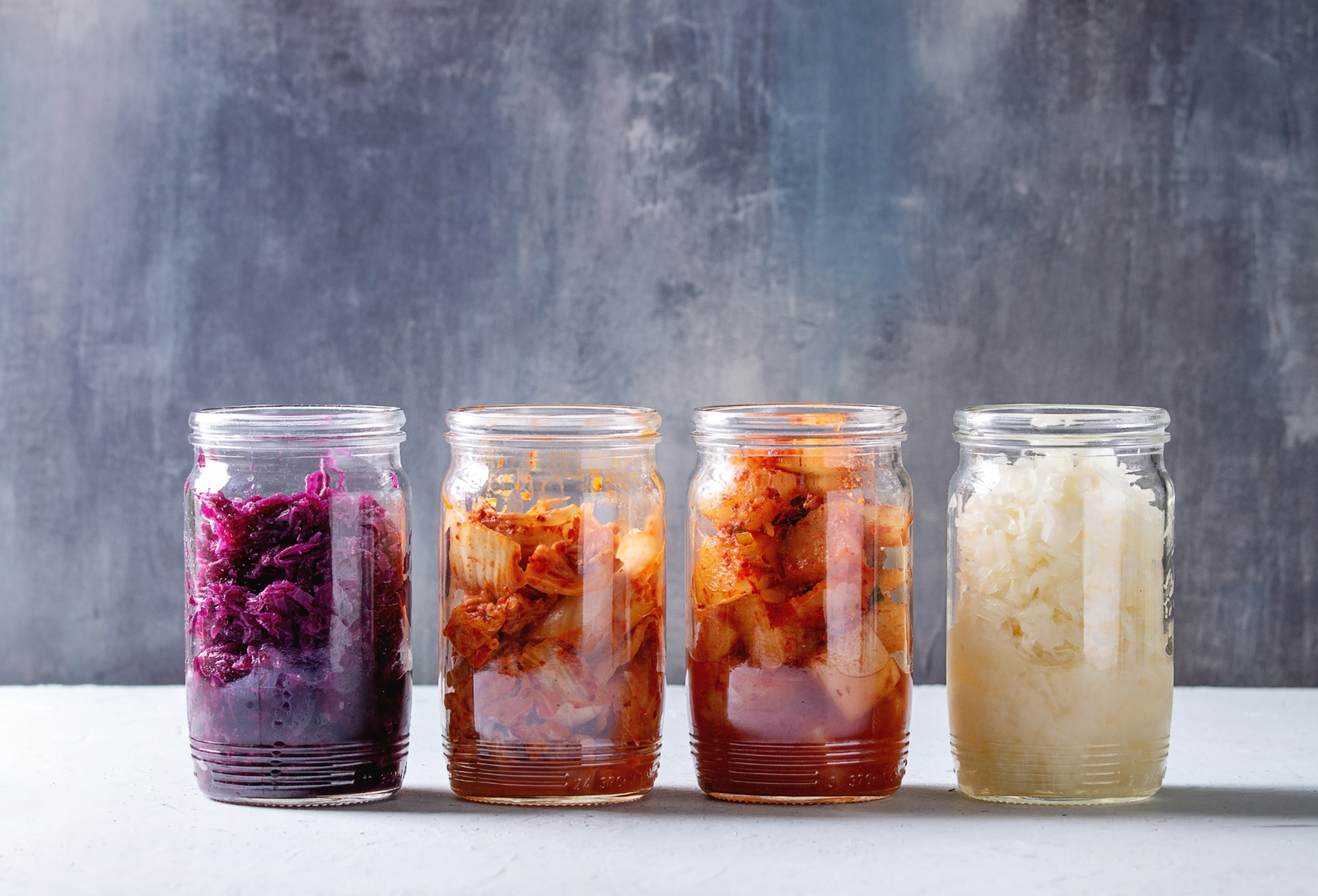
Open any fridge in our house and you will find a jar of something bubbling quietly away: Kefir grains multiplying in milk, a crock of cabbage turning gold, kimchi deepening in colour by the day. Fermented foods have become one of the simplest, most enjoyable changes we have made to how we eat, and they are also one of the best-evidenced ways to support the trillions of microbes that live in your gut.
This is a first look at fermentation: what it is, the foods worth knowing, how to shop for quality, and how to make your own at home. Think of it as the doorway. We will go deeper on each food, and on making your own, in articles to come.
What Fermentation Actually Is
Fermentation is simply food being transformed by bacteria, yeasts, or both. Given the right conditions, usually just salt, time, and the absence of oxygen, these microbes break down sugars in the food and produce lactic acid, alcohol, or other compounds as a by-product. That is what gives fermented foods their tang.
It is one of the oldest food practices in human history, long used to preserve a harvest through the colder months. What makes it interesting for us today is that many ferments arrive at your table still teeming with the very same live bacteria that did the transforming, and some of those can go on to support your own gut microbiome.
The Foods Worth Knowing
Kefir
A fermented milk drink, thinner and tangier than yoghurt, made using kefir grains, a cluster of bacteria and yeast working together. It typically carries a broader range of microbial strains than yoghurt.
Kimchi
Korea’s fermented cabbage, usually napa cabbage with chilli, garlic, and ginger. Beyond the bacteria, it brings a good hit of fibre and plant compounds from the vegetables and aromatics themselves.
Sauerkraut
Fermented cabbage in its simplest form: cabbage and salt, nothing else. Traditionally fermented sauerkraut needs no vinegar or preservatives; the lactic acid produced during fermentation is what keeps it stable.
Others worth trying
- Yoghurt with live cultures, the easiest entry point for most people
- Miso, a fermented soybean paste, best stirred in after cooking to protect the cultures
- Tempeh, a fermented soybean cake that offers gut benefits even when cooked
- Kombucha, a fermented tea, worth choosing unpasteurised and checking the sugar content
- Sourdough, made using a live starter, though the cultures do not survive baking
Why It Works
The clearest evidence so far comes from a Stanford University trial, published in the journal Cell, which followed healthy adults over ten weeks on either a high-fibre or a high-fermented-food diet.
- The fermented food group saw a measurable rise in gut microbiome diversity, while the high-fibre group did not, at least not within that ten-week window
- Nineteen inflammatory markers fell in the fermented food group, including interleukin-6, a marker linked to chronic inflammation
- The more fermented food eaten, the greater the improvement in diversity, up to the six daily servings used in the trial
- A more diverse microbiome is associated with better metabolic and immune resilience, though researchers are clear that diversity is a marker of gut health, not a guarantee of it
How much and how often
You do not need six servings a day to see a benefit, and starting slowly matters. Begin with one small serving daily for a week, a forkful of sauerkraut or a small glass of kefir, then build towards two to three servings a day as your gut adjusts. Introducing live cultures too quickly can bring on temporary bloating, which settles as your microbiome adapts.
What to Look for When Buying
Not everything labelled “fermented” on a supermarket shelf still contains live cultures, and the difference matters if you are buying for gut health rather than flavour alone.
- Choose the refrigerated section, not the shelf-stable aisle. Ambient sauerkraut, pickles, and kimchi have almost always been pasteurised, which kills the very bacteria you are buying it for
- Look for the words “raw”, “unpasteurised”, or “live and active cultures” on the label
- For yoghurt and kefir, the Live & Active Cultures seal is a reliable positive signal
- Check the ingredients list for named bacteria, such as Lactobacillus, rather than a vague reference to “probiotics”
- Avoid vinegar as a leading ingredient in pickles or sauerkraut; that is a shortcut to sourness, not a true ferment
- Watch sugar levels in kombucha, and salt levels in kimchi and sauerkraut, particularly if you buy the same jar often
A local farmers’ market or an independent maker is often your best source of all. A quick conversation with the person who made it, asking simply whether it has been heated after fermenting, will usually tell you everything you need to know.
Make Your Own: A Brief Starting Point
Sauerkraut is the easiest ferment to start with at home, needing nothing more than cabbage, salt, and a clean jar.
- Shred one cabbage finely and weigh it.
- Add salt at around 2% of the cabbage’s weight and massage it in until the cabbage releases its own liquid.
- Pack it tightly into a clean jar, pressing until the liquid rises above the cabbage, then weigh it down so it stays submerged.
- Leave at room temperature, out of direct sunlight, for one to four weeks, tasting as you go, then move it to the fridge once it tastes right to you.
We will publish a full, detailed guide to making your own kraut, kimchi, and kefir, with troubleshooting and timings, as a follow-on to this piece.
Further Reading & Sources
Wastyk et al., “Gut-microbiota-targeted diets modulate human immune status“, Cell, 2021.
Stanford School of Medicine, coverage of the Wastyk fermented-food and fibre trial, 2021.
American Medical Association, “From kimchi to kefir: what to tell patients about fermented foods“.
Freshly Fermented – UK website for great Fermented food information and online shop
This article is for general education only and is not medical advice. Gut and Grain does not diagnose, treat, or replace the guidance of a qualified healthcare professional. If you have a health condition or take medication, please speak with your doctor before making significant dietary changes