
Journal · Gut · Heart · Brain
Ultra-Processed Foods: What They Are and Why They Matter
Learn · Ultra-Processed foods · Overview
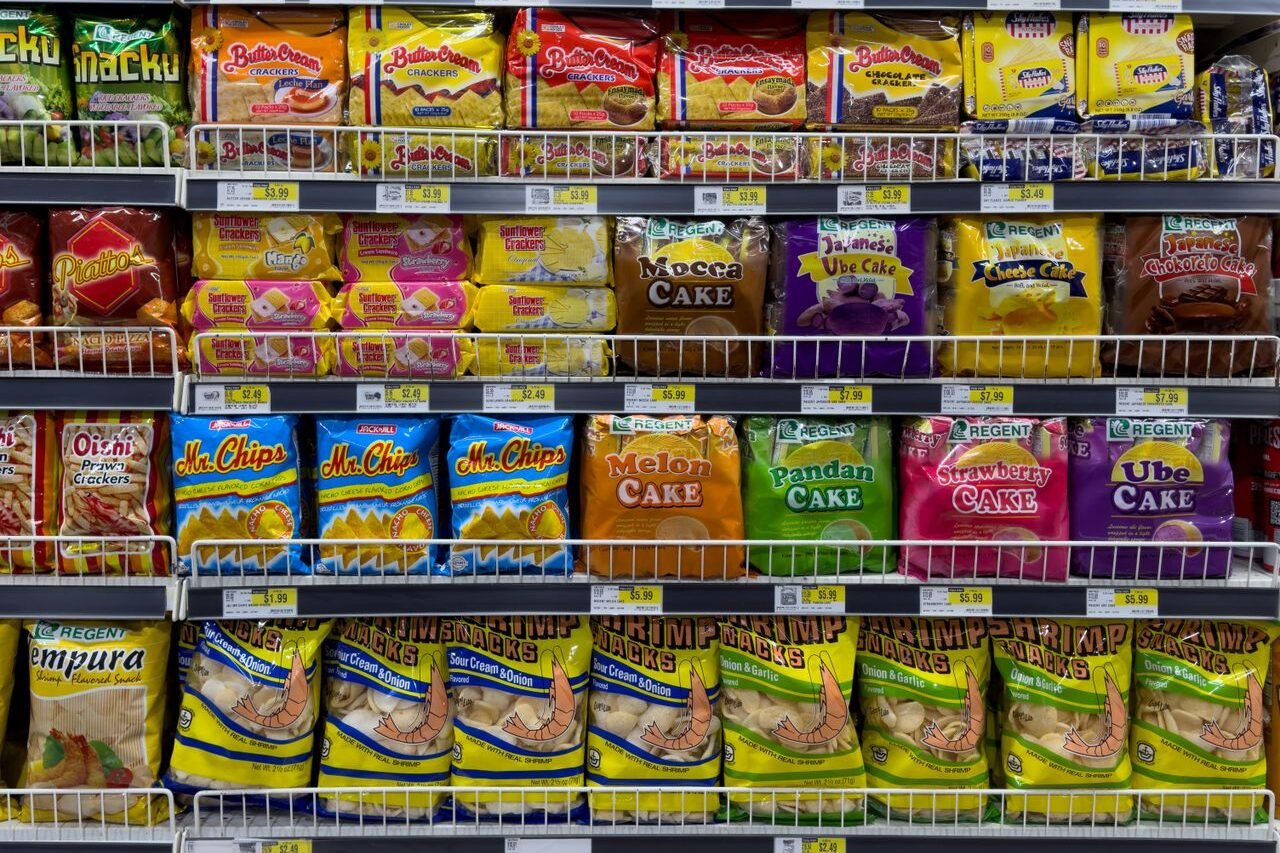
“Ultra-processed” is one of those phrases that seems to be everywhere at the moment. It’s in the news, on the radio and, more and more, on the front of packets telling you what a product isn’t. But when we started looking properly at what was in our own cupboards, we realised we couldn’t have explained exactly what ultra-processed foods were.
So we went and found out. This page is everything we learned, in one place. If you only read one thing about ultra-processed food, we hope it’s this. Where we’ve gone into more detail, you’ll find links at the end.
What are ultra-processed foods?
Most of us were taught to judge food by its nutrients: how much sugar, fat or salt it has. Ultra-processed food is defined differently. It’s about how the food is made.
Researchers use a system called NOVA, created by Professor Carlos Monteiro’s team in Brazil, which sorts food into four groups:
- Unprocessed or minimally processed foods. Fruit, vegetables, grains, eggs, meat, fish and milk: washed, frozen or pasteurised perhaps, but otherwise as nature made them.
- Cooking ingredients. Oil, butter, salt, sugar and vinegar: things you cook with rather than eat on their own.
- Processed foods. The first two groups combined: bread from a bakery, cheese, tinned fish, our homemade sauerkraut. Short ingredient lists, made in ways you could copy at home.
- Ultra-processed foods. Products built mostly from ingredients you’d never find in a home kitchen, such as glucose syrup, protein isolates and modified starches, plus additives whose job is to change colour, flavour or texture.
That fourth group is the one that matters here. Think fizzy drinks, most breakfast cereals, packaged snacks, sweets, many ready meals, mass-produced bread and most processed meats.
And it’s most of what we eat now. In the UK, ultra-processed food makes up around two-thirds of the calories teenagers eat.
The kitchen cupboard test
You don’t need to memorise any of this. The simplest check we know is to read the ingredients and ask: could I make this from things in my own kitchen?
If the answer is yes, you’re probably fine. If the list includes words like these, it’s almost certainly ultra-processed:
- Glucose syrup, glucose-fructose syrup, maltodextrin or dextrose
- Hydrolysed, isolated or textured protein
- Modified starch
- Emulsifiers such as mono- and diglycerides, carrageenan or carboxymethylcellulose
- Sweeteners such as sucralose, aspartame or acesulfame K
- Flavour enhancers such as monosodium glutamate
It’s worth saying what isn’t on that list. Frozen vegetables, tinned beans, plain yoghurt, cheese and proper bread are all processed in some way, and all perfectly good food. Processing isn’t the problem. Taking food apart and rebuilding it is.
How did they take over?
People have always processed food, by salting, drying and fermenting it. What changed, mainly from the 1970s, is that cheap crops like corn, wheat and soy began to be broken down into their parts and rebuilt into new products. Food stopped being prepared and started being designed.
Some of the companies doing the designing had plenty of experience in making products hard to give up: in the 1980s, the two biggest American tobacco companies owned many of the world’s best-known food brands. We tell that story in How ultra-processed food took over.
Why they’re so hard to stop eating
This is the bit that changed how we think about our own eating. Many ultra-processed foods are deliberately developed to hit a “bliss point”: the exact level of sugar, salt or fat at which we enjoy them most. Researchers call foods that combine these in ways rarely found in nature “hyper-palatable”, and one US study estimated that 68% of the American food supply now fits that description.
The clearest evidence that this changes how much we eat comes from a 2019 trial at the US National Institutes of Health. Twenty adults lived in a research unit and ate two diets for two weeks each, one ultra-processed and one minimally processed, matched as closely as possible for calories, sugar, fat, fibre and salt. They could eat as much as they liked. On the ultra-processed diet, they ate around 500 more calories a day and gained weight. On the minimally processed diet, they lost it.
Soft textures help too. Food that needs little chewing is eaten quickly, often before our “I’m full” signals have had time to catch up. If you’ve ever felt that constant background chatter we call food noise, a lot of it starts here. It isn’t a lack of willpower. These products were built to be hard to resist.
What the research shows
The research linking ultra-processed food to poorer health has grown quickly over the past decade. In 2024, the BMJ published a review that brought together 45 meta-analyses covering nearly 10 million people. It linked higher intakes to 32 health problems. The strongest evidence was for:
- around a 50% higher risk of dying from heart disease
- a 48% to 53% higher risk of anxiety and common mental health problems
- a 12% higher risk of type 2 diabetes
Most of these studies observe people over time, so they show links rather than proof that ultra-processed food is the cause. But the links are consistent across countries and study types, and trials like the NIH one show at least part of how it happens.
Why we care most about the gut
Gut health is at the heart of what we write about, and it’s where some of the most interesting research is happening.
Our gut microbes live largely on fibre and the natural compounds in plants. Ultra-processed food tends to be low in both, so a diet built around it leaves them short of food. That’s one reason we try to eat a wide variety of plants each week.
Some additives may affect the gut directly. In a small 2021 trial, healthy adults who ate a common emulsifier, carboxymethylcellulose, for two weeks had fewer of certain beneficial gut bacteria and lower levels of the helpful compounds those bacteria make. In some volunteers, bacteria had moved into the protective mucus layer that lines the gut. It’s early research, but it’s exactly the kind of thing that makes us read labels a little more closely.
What we actually do
None of this means we’ve cut out everything that comes in a packet. We haven’t, and we don’t think you need to either. What helps is a handful of simple habits:
- We read the label. The kitchen cupboard test takes seconds, and after a while you know which products pass.
- We keep simple staples in. Oats, tins, eggs, frozen veg, nuts and something fermented in the fridge mean there’s always a real meal within reach. We’ve written about how we stock our kitchen in The Art of Not Planning.
- We count frozen and tinned as real food. Plain frozen peas or a tin of chickpeas are minimally processed and every bit as useful as fresh.
- We swap one thing at a time. We stopped buying microwave meals first, then moved on to the next thing. Small changes stick.
- We eat at the table. Eating slowly, without a screen, gives our “I’m full” signals a chance to work.
- We don’t chase perfect. Ultra-processed food will always be around. The aim is for it to be the exception, not the everyday.
Want to dig deeper?
We’re covering the bigger topics in their own articles, which we’ll add here as they go live:
- How ultra-processed food took over (coming soon): from Napoleon’s canned rations to snack brands once owned by tobacco companies
- Ultra-processed food and your gut (coming soon): why the way food is built changes what it does inside you
- The bliss point (coming soon): how food science makes products so hard to put down
- Additives in plain English (coming soon): what emulsifiers, sweeteners and flavour enhancers are actually doing
- How to read a food label (coming soon): a simple guide for the supermarket
Further Reading & Sources
NOVA and its four groups from Monteiro, C.A. et al., “Ultra-processed foods: what they are and how to identify them,” Public Health Nutrition (2019); UK teenagers’ calories from ultra-processed food from Chavez-Ugalde, I.Y. et al., European Journal of Nutrition (2024); tobacco-owned food brands and the 68% hyper-palatable figure from Fazzino, T.L. et al., Addiction (2023), via the University of Kansas; the extra 500 calories a day from Hall, K.D. et al., “Ultra-Processed Diets Cause Excess Calorie Intake and Weight Gain,” Cell Metabolism (2019); the 32 health outcomes from Lane, M.M. et al., “Ultra-processed food exposure and adverse health outcomes: umbrella review of epidemiological meta-analyses,” BMJ (2024); the emulsifier trial from Chassaing, B. et al., “Randomized controlled-feeding study of dietary emulsifier carboxymethylcellulose reveals detrimental impacts on the gut microbiota and metabolome,” Gastroenterology (2022).
Parts of this article were inspired by Yuka’s independent report on ultra-processed foods. Gut & Grain has no partnership or commercial relationship with Yuka; we simply found their research useful. The original studies are linked above.
This article is for general education and interest only. Jez and Mel are not medically qualified, and nothing here is intended as medical or clinical advice. If you have concerns about your health, diet or digestion, please speak to a qualified healthcare professional.